Canada’s Housing Crisis: Understanding the Economic Impact

Canada’s Real Estate Trap: How Housing Ate the Economy
(And Why This Isn’t 2008 — Yet)
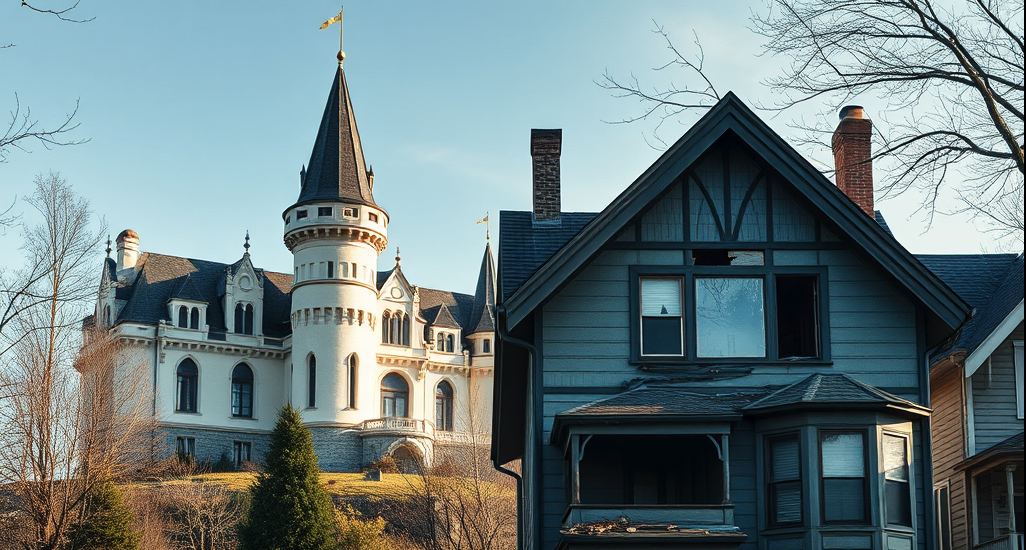
Imagine you have $1.5 million.
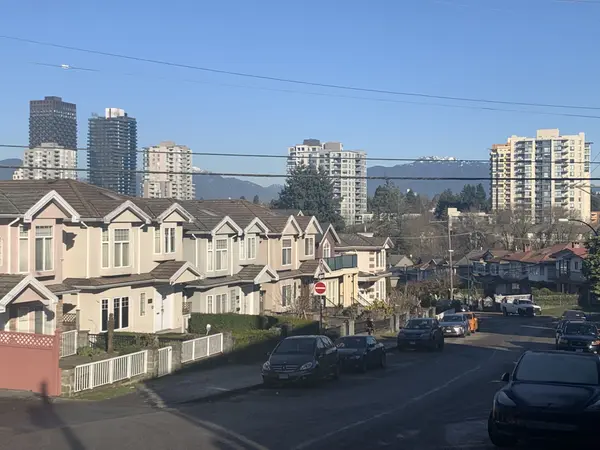
In Normandy, France, that buys you a literal castle — 12 bedrooms, stone walls, maybe even a ghost judging your wine choices. In Toronto or Vancouver? That same money gets you a semi-detached teardown with a low basement ceiling and a lingering smell of wet dog.
This isn’t just a housing problem. It’s an economic one.
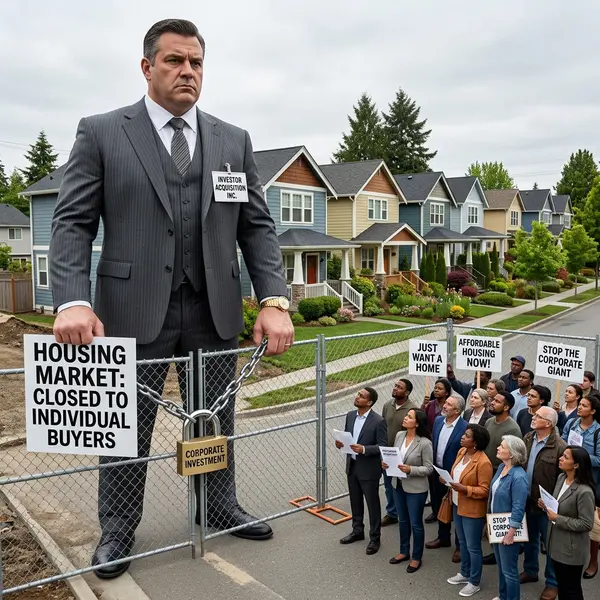
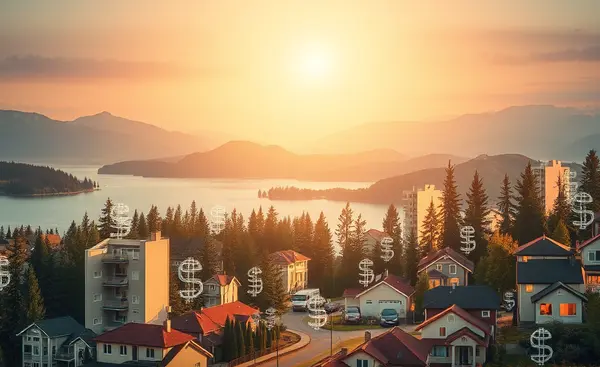
Over the last two decades, Canada didn’t simply experience a real estate boom — housing swallowed the entire economy. Capital, talent, political will, and household debt all flowed into one asset class. The result is a country that increasingly mistakes debt for wealth and price inflation for prosperity.
Let’s break down how we got here — and why the comparison to the U.S. housing crash of 2008 is both valid and misleading.
1. The Great Capital Suck: Why Canada Stopped Building Things
Healthy economies grow when capital flows into productive assets: businesses, technology, machinery, research, and innovation.
Canada chose a different path.
Instead of funding startups or scaling industries, an enormous share of available capital was diverted into residential real estate. Banks routinely reject business loans as “too risky,” yet eagerly finance aging condos with questionable plumbing — because housing is perceived as “safe.”
The result?
-
Business investment in Canada lags most advanced economies
-
Residential investment rivals or exceeds non-residential investment
-
Productivity growth has flatlined
According to OECD projections, Canada is expected to be the worst-performing advanced economy over the next decade. That’s not because Canadians aren’t capable — it’s because capital stopped chasing innovation and started chasing price appreciation.
When buying a townhouse and doing nothing generates a 30–40% return, why take entrepreneurial risk?
Individually rational. Nationally destructive.
2. HELOC Nation: When Rising Home Prices Replaced Wage Growth
From 2010 to 2021, Canadian households didn’t feel poor — even as wages stagnated — because housing prices exploded.
Enter the HELOC (Home Equity Line of Credit).
Rising home values created the illusion of wealth. Homeowners borrowed against inflated equity to fund:
-
Vehicles
-
Renovations
-
Vacations
-
Investment properties
Consumption surged — not because incomes grew, but because debt expanded.
At peak levels, Canadian household debt reached 180–185% of disposable income, surpassing U.S. levels even before the 2008 crash.
When interest rates rose in 2022–2023, the hangover hit fast:
-
Variable-rate HELOC payments tripled
-
Disposable income collapsed
-
Consumer spending slowed sharply
Even more alarming: negative amortization. Many Canadian mortgages no longer cover interest payments, extending amortizations to 40, 50, even 70 years.
That isn’t homeownership — it’s intergenerational debt.
3. The Population Trap: GDP Growth That Feels Like Decline
Canada’s economy appears to be growing — but most Canadians feel poorer. That contradiction comes down to population growth masking per-person decline.
In 2023 alone, Canada added over 1.2 million people, the fastest growth rate since the 1950s.
But:
-
Housing supply didn’t keep pace
-
Infrastructure didn’t expand fast enough
-
Productivity didn’t improve
GDP rose — but GDP per capita fell, which is what actually reflects living standards.
Economists have started calling this a population trap: using rapid population growth to prop up headline GDP while individual prosperity declines.
The pressure lands squarely on housing, driving rents higher and transferring wealth from newcomers and younger Canadians to existing asset owners.
4. Too Big to Fail: Why Housing Never Gets to Correct
In theory, overpriced assets should correct.
In practice, Canadian housing is politically protected.
Homeowners represent the most powerful voting bloc in the country. A 20% price decline would trigger electoral fallout. As a result, governments of all stripes intervene:
-
CMHC mortgage insurance shields banks, not borrowers
-
Amortizations are extended instead of defaults allowed
-
Mortgage bonds are purchased to inject liquidity
-
New demand-side incentives are introduced
This creates moral hazard: risk-taking behavior because losses are socialized.
Every time housing tries to correct, policy steps in to stop it. The forest never burns — so dry wood keeps piling up.
5. Owners vs Renters: Canada’s New Caste System
Canada quietly replaced its middle-class promise with a rigid divide:
Class A: Owners
-
Purchased before 2015
-
Hold large, often tax-free capital gains
-
Leverage equity to acquire more assets
Class B: Renters
-
Pay 50–60% of income toward housing
-
Struggle to save for down payments
-
Delay family formation and life milestones
This isn’t just economic — it’s social. Canada’s fertility rate hit historic lows, and young professionals increasingly experience arrested adulthood.
Housing has become a wealth transfer mechanism, not a shelter system.
6. Snow Washing: When Global Capital Distorts Local Markets
Canada’s real estate boom wasn’t driven solely by families and immigrants.
For years, weak transparency laws allowed large volumes of laundered international money to flow into housing — particularly in Vancouver and Toronto.
Reports estimate billions annually entered Canadian real estate through opaque ownership structures. When price-insensitive capital enters a housing market, affordability disappears — regardless of local wages.
7. The Brain Drain: Losing the People Who Build Economies
When housing absorbs 50–60% of take-home pay, high-skilled workers make rational choices.
A Canadian software engineer earning $85,000 in Toronto competes with U.S. offers paying $140,000 USD — while housing costs less.
Canada subsidizes education, then exports talent.
A country cannot thrive on real estate transactions alone. It needs engineers, entrepreneurs, doctors, and innovators — many of whom are quietly leaving.
How This Is Like the U.S. Housing Crisis of 2008
There are clear similarities:
-
Excessive household leverage
-
Housing treated as a wealth engine
-
Moral hazard within the financial system
-
Debt-driven consumption masking weak fundamentals
In both cases, housing prices detached from incomes, and debt filled the gap.
How Canada Is Different From 2008 America
This is where nuance matters.
1. Lending Standards
Canada did not experience widespread subprime lending on the U.S. scale. Most borrowers qualified under stricter underwriting rules.
2. Recourse Mortgages
In much of Canada, mortgages are full-recourse. Walking away doesn’t erase debt — which reduces default rates but increases long-term financial stress.
3. Banking Structure
Canada’s banking system is more concentrated and regulated. That lowers systemic collapse risk but increases political pressure to intervene.
4. Government Backstopping
CMHC insurance explicitly transfers risk from banks to taxpayers — something the U.S. lacked prior to 2008.
The Result:
Canada is less likely to experience a sudden, violent crash — and more likely to face long-term stagnation.
The Endgame: Crash or Japanification?
Two outcomes remain:
Scenario A: The Crash
-
Prices fall 30–50%
-
Housing becomes affordable
-
Severe short-term economic pain
Politically unlikely.
Scenario B: Stagnation (Japan 2.0)
-
Prices remain high in nominal terms
-
Inflation erodes real value
-
Wages stagnate for decades
This is the quieter, more probable path — and arguably the more painful one.
Final Thoughts: Breaking the Spell
High home prices are not wealth creation. They are inflation.
Canada doesn’t lack resources, talent, or opportunity — it lacks balance. We locked too much capital, energy, and political protection inside housing and called it success.
Fixing this requires a cultural shift:
-
Stop celebrating rising home prices
-
Reward productivity, not speculation
-
Build housing and productive capacity
-
Accept that housing corrections are not failures — they’re resets
This isn’t about rooting for collapse. It’s about recognizing reality.
A country cannot build its future by selling the same houses to each other at higher prices forever.
Eventually, the bill comes due.
Categories
Recent Posts